

Most experts think the best book topic is the one that shows everything they know. If you are an experienced person, that book could be massive, right?
Instead of writing a huge book, think more narrowly. The topic that becomes an authority-building book is the limited one. It’s the single problem you already get paid to solve. Your book is for the readers you may not meet in person but need what you know.
An Authority-Building Book That Came From a Shared Problem, Not an Ambition
My first book came out in 1986. I was part of a group of staff development educators who met each month for support and sharing. Three nurse educators, at three different hospitals, had all been told by our nursing administration to teach a subject called nursing diagnosis. None of us had materials. I said, “It makes no sense for three people to develop the same thing separately. Let’s work together to create the teaching materials we could all use at our three hospitals.”
So, we wrote one self-learning module together, each taking a piece that we then combined into one set of instructional tools. Our nursing staffs loved the content.
I then approached publishers, hoping we could publish the module as is. After the second time I heard from the publisher, “Great self-learning module but we need a textbook we can sell to nursing schools”, we spent six months modifying the material into a textbook. We became the authors of Nursing Process and Nursing Diagnosis in 1986. We revised the book for three editions, and the book was translated into three languages: Spanish, Portuguese, and Japanese.
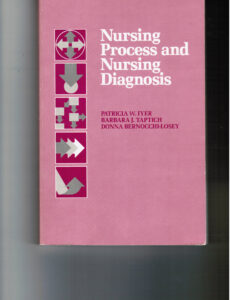
In 1987, when I discovered the fascinating and demanding role of nursing expert witnesses, the book gave me the credibility to approach attorneys, leading to a 20-year-long career as a medical surgical nursing expert witness.
That book answered a question attorneys needed answered: is this nursing expert credible and an authority in her field? I wasn’t trying to prove I was an expert. I already was one. The book was proof, and it kept working long after I finished writing it, opening doors I couldn’t have reached with a business card or a bio.
In 1989, when an attorney asked me to review an emergency department case, and I referred that case to a colleague, I realized there was an opportunity to subcontract cases to nursing experts. My company grew into a highly successful one based on recruiting and training other medical experts to work for my company.
In addition to a long career testifying, I had opportunities to speak nationally and internationally, consult with hospitals, coach other legal nurse consultants, teach courses, and of course, write more books. And ultimately I sold the legal nurse consulting business. My first book was the start of a path that resulted in millions of dollars of income.
Test Your Topic Against What You Already Sell
If you’re a coach, consultant, or speaker, you don’t need a new idea for an authority-building book. You need to look at the work you already do. Before you settle on a topic, ask yourself:
- What do clients pay me to fix, repeatedly?
- What training or keynotes do my clients most often request?
- What’s the question I answer in nearly every first consulting call?
- What do I explain so often that I could say in my sleep?
- What do people assume they should figure out alone, when I could shortcut it for them?
- What’s the one result I get for clients that my competitors don’t?
One of those questions will feel more appealing than the rest, the one you could talk about for an hour without notes. That’s your topic. Write it down as a single sentence before you outline a chapter.
Why the Broad Topic Feels Safer, and Isn’t
It’s the reverse. A broad book proves you have knowledge. A narrow one proves you have a result, and a result is what a reader can act on. A prospective client doesn’t hire you because you know a lot. They hire you because you’ve solved their specific problem before, and the authority-building book is the evidence.
Think about who buys a book from a coach, consultant, or speaker. It’s someone with that exact problem, searching for someone who has already solved it. A book titled around your whole practice or all your expertise speaks to no one in particular. A book titled around the result you deliver speaks directly to the person who needs it.
The same test applies to the client sitting across from you today. If you cannot describe your book’s topic and the problem you solve to that one person in a single sentence, the topic is still too wide. Narrow it to the sentence you would say out loud.
The Topic Needs a Job, Not Just a Subject
A good authority-building book topic does three things at once.
- It matches a problem your paying clients already have.
- It matches the specific service or program you sell — the thing you want more clients for.
- And it gives a stranger enough of your thinking to trust you with a bigger ask.
That third part is the one people forget. You’re not only writing to the client already on your calendar. You’re writing to a reader who found your book through a search or a friend’s recommendation and decides, in one sitting, whether your book is worth finishing, and if you are worth calling. Will a book on a subject too broad to name in a sentence earn that call? A book that defines exactly what problem it solves will.
Ask yourself one more question before you start outlining: if a stranger read only the title and the back cover, would they know who this book is for and what it fixes? If the answer is no, the topic isn’t ready. Narrow it until the answer is yes.
Start With the Result, Not the Résume
You don’t build authority by listing what you’ve done. You build it by handing a reader the exact fix they came looking for, in your own voice, at a length they’ll finish. This is the way you build trust.
The topic that does that isn’t the one that covers the most ground. It’s the one that answers the question you’re qualified to answer, displaying your knowledge long after the book ends.
Authors work with me as a book coach to help them find that topic and build the book around it. Use the contact form to request a call with me.
 Pat Iyer MSN RN LNCC is a consultant, speaker, author, editor, and book coach. She has written or edited 73 of her own books and worked with dozens of authors as an editor and book coach.
Her most recent books include AI-Powered Video for LNCs book and workbook.
Subscribe to Pat’s Substack account at this link for her latest posts and notes on The Writer’s Toolbox.
Pat is an Amazon international #1 bestselling author. Coaches, consultants, and speakers hire Pat to help release the knowledge inside them so that they can attract their ideal clients.
She delights in assisting people to share their expertise by writing. Contact her at http://patiyer.com/contact