

A speaker delivered a presentation to a room of peers. It was detailed, filled with insights, and sparked a lively discussion. Encouraged, he turned the talk into a blog post and shared it with prospective clients.
It fell flat. No emails, no calls, no invitations to speak. What went wrong?
When he looked closely, the issue became clear. The content assumed a level of background knowledge his clients didn’t have. The examples were too technical. The key message was buried under layers of detail.
His powerful presentation contained the emotion of the moment, the body language, and the pauses for laughs, none of which could come through in a blog.
He rewrote the piece with a different audience in mind—shorter sections, clearer explanations, and examples tied directly to client concerns.
This time, readers reached out. It was the same message, with a different approach and yielded a different result.
You can write a clear, insightful piece—and still miss your mark completely. Not because your ideas are weak, but because your audience is different, and your writing did not reach them.
Writing for different audiences requires more than changing a few words. A prospective client, a professional colleague, and a reader of an industry publication each approach your content with different expectations. When you don’t adjust your approach, your message can fall flat.
Strong business writing begins with one decision: Who is this for? Once you answer that, your tone, structure, and intent will correctly target your audience.
Why Writing for Different Audiences Matters
When you tailor your writing to your audience, your message becomes easier to understand—and more persuasive.
Your readers are not all looking for the same thing:
- Clients want clarity and reassurance
- Colleagues want insight and shared experience
- Industry readers want credibility and relevance
Understanding these differences allows you to shape your content so that it resonates with your reader. And yes, you should be able to reach these 3 audiences with a core piece of content that you modify for the specific audience.
Writing for Different Audiences: Prospective Clients
They are asking:
- Do you understand what I’m dealing with?
- Can you explain this clearly?
- Can I trust you?
How to adjust your writing
Tone: Conversational and clear
Structure: Easy to scan
Intent: Build trust, establish your credibility and experience
Use formatting to guide your reader. Headings and short sections help break up content and make it easier to follow.
Include:
- Short paragraphs
- Bullet points to outline options
- Simple examples that reflect real situations
- Stories to hook the reader
This approach makes your writing feel approachable and practical.
Avoid:
Overly technical language or long, dense explanations and paragraphs.
Writing for Different Audiences: Colleagues
When writing for colleagues, you are communicating with people who share your background and experience.
They are looking for:
- Insight
- Perspective
- Practical application
How to adjust your writing
Tone: Professional and thoughtful
Structure: Organized with more detail
Intent: Share your expertise
You can go deeper here. Discuss nuances, compare approaches, and explain your reasoning.
Formatting tools can strengthen your message:
- Numbered lists for processes
- Highlighted text for key ideas
- Examples that illustrate decision-making
- Stories that make the points
Your role shifts from explaining basics to contributing to professional understanding.
Avoid:
Repeating introductory concepts your audience already knows.
Writing for Different Audiences: Industry Publications
Writing for an industry audience requires you to establish credibility quickly.
Your reader is deciding:
- Is this relevant?
- Is this writer credible?
- Is this worth my time?
How to adjust your writing
Tone: Authoritative and focused
Structure: Strong opening, clear flow
Intent: Inform and position your expertise
Start with a compelling story that highlights a common issue or emerging trend.
Then guide the reader with clear organization:
- Headings that signal key sections
- Concise paragraphs
- Emphasized points (using italics) for quick reference
You may also include references, brief data points, or quotes to reinforce your perspective.
Avoid:
Being too casual or assuming the reader is familiar with your work.
Writing for Different Audiences: One Core Message, Multiple Approaches
A common mistake is writing one version of content and using it everywhere.
Instead, adapt your message:
- For clients: simplify and connect
- For colleagues: expand and analyze
- For publications: refine and present
The idea stays the same. The delivery changes.
This is the foundation of effective writing for different audiences.
Practical Techniques to Improve Writing for Different Audiences
No matter who you are writing for, these strategies improve clarity and engagement:
- Use headings to guide the reader
- Break information into bullet points or lists
- Emphasize key ideas to make them stand out
- Include examples and stories to make concepts concrete
- Keep your structure intentional and easy to follow
These techniques help readers move through your content efficiently and retain what matters most.
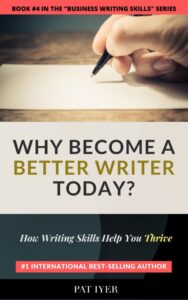 As a writer and editor who has worked with many clients, I know that anyone can improve their writing. In Why Become a Better Writer Today? How Writing Skills Help You Thrive, I describe what it takes to become a competent writer.
- Passion for your subject,
- The ability and willingness to do research,
- The commitment to get the writing done,
- The willingness to learn grammatical skills,
- Patience with yourself and the process of writing.
Order this book here.
Final Thought
Writing for different audiences is not about rehauling your entire message. It’s about making your message tailored to the person reading it. When your tone, structure, and intent align with your audience, your writing becomes more effective—and more valuable. And that is what keeps readers coming back.
Pat Iyer MSN RN LNCC is a consultant, speaker, author, editor and coach. She has written or edited 73 of her own books and worked with dozens of authors as an editor. Her most recent books are AI-Powered Video for LNCs book and workbook. These books reached Amazon #1 Bestseller status a few days after their release.
Pat is an Amazon international #1 bestselling author. Coaches, consultants, and speakers hire Pat to help release the knowledge inside them so that they can attract their ideal clients.
She delights in assisting people to share their expertise by writing. Pat serves international and national experts as an editor, book coach, and a medical and business writer.