

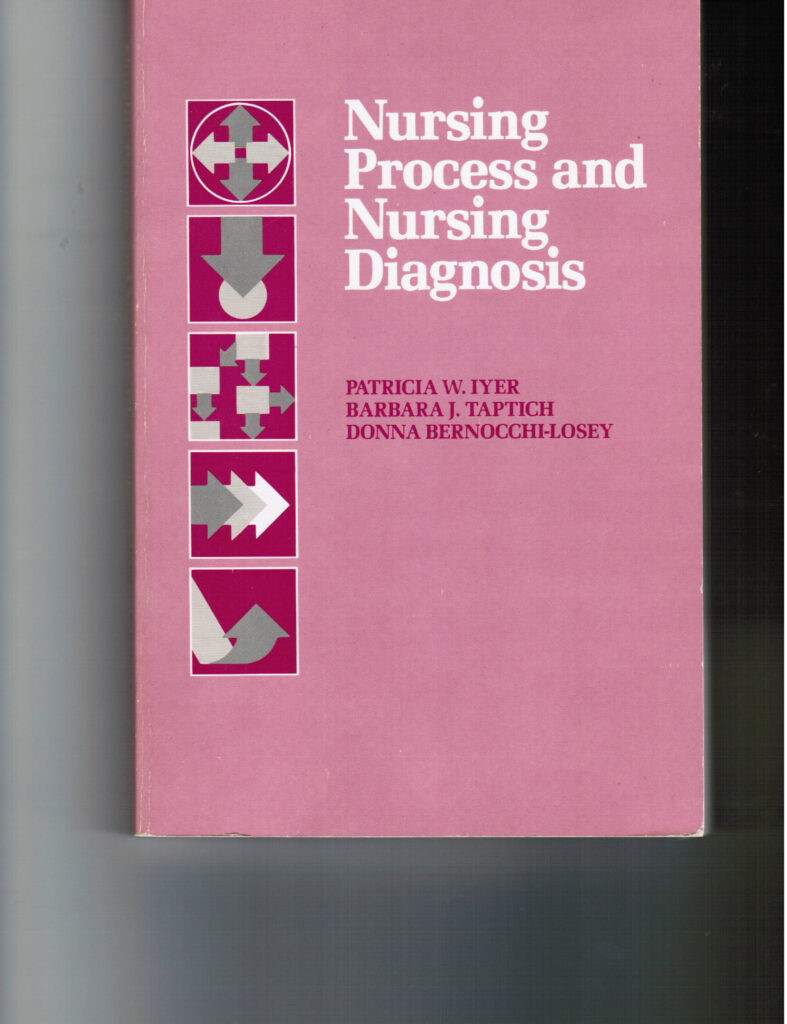
It sounded daunting when the acquisition editor said: “We’ll help you turn your self-learning module into a textbook.” And that is exactly how I coauthored my first book. After handing us a contract, the publisher explained the next steps: galleys, page proof, and printing. We worked together for more than a year, stepping through the phases of turning our manuscript into a finished textbook.
Nursing Process and Nursing Diagnosis went right from the printers to a large nursing conference. As we entered the conference site, my coauthor and I spotted a woman holding our book. We squealed, “She’s got our book!”
It was a heady experience.
From 1985 to 2010, I worked with traditional publishers before leaving that world behind to embrace self-publishing for my next 55 books. Had I not published 19 books with traditional publishers, I would not have understood some of the nuances that directly apply to self-publishing.
Here are some tips that help authors who self-publish.
The Power of Stet
It is far easier today to publish than it used to be. Initially, I worked with copyeditors who printed out my chapter, used red pencils, and a variety of arcane proofreading symbols to show me what they changed. I discovered the power of the word “stet”, which means “let it stand”. It tells the copyeditor to leave the words as originally written. I learned that the “au” or author had the responsibility to make sure the copyeditor had not changed the meaning of the sentence or deleted critical information.
Next, the typesetter set the corrected manuscript into type, and then I got long, unpaginated strips of text called galleys to check for errors. After I spent many bleary-eyed hours peering at these pages, I returned the galleys, with more changes. The last stage was page proofs, where I saw the pages with page numbers and running heads.
As type setting moved to computers, the publishers started dropping the galleys and sent me copyedited pages, followed by page proofs.
A traditional publisher has a team of people to help turn the book into reality: an acquisition editor, copy editors, designers, marketers, and printers. You have….you. You’ll need to hire out parts of this process unless you are prepared and trained to do it all.
A self-published book produced by an author who does not understand editing, formatting, proofreading, and cover design does not represent you well. It screams amateur.
Traditional Publishing Procedures Help Self-Publishing
As I worked with traditional publishers, I learned the importance of these parts of publishing; these are just a few examples.
Figures and Tables
It is imperative that you respect copyright laws. You can not replicate a figure or a table, for example, without getting permission from the original source. It can cost more and take longer to get permission that you’d expect, so start early.
Make sure to refer to every figure or table you put in your chapter and place it close to where you mention it. One of my traditional publishers had a copyeditor who placed my figures many pages after I mentioned them, which would have confused the reader had I not insisted they be moved closer.
Create a list of figures and tables for each chapter as you write. It is incredibly easy to duplicate figure or table numbers unless you keep an up-to-date list.
References
Use the accepted method of citing references in your field. Some of the main citation systems used include the American Psychological Association (APA), Chicago Manual of Style, Modern Language Association (MLA), American Medical Association (AMA), Vancouver, Harvard, and IEEE for engineering and computer science. If you are not sure how to use the system, AI is your friend. I’ve found I can query AI to see if I’ve correctly followed the format.
Making Changes
It can become very expensive to make changes in a manuscript. My publishing contracts had an author’s alterations clause. The publisher paid for author changes at page proof stage up to about 10% of the original cost of typesetting. The author paid for changes beyond that, with payment subtracted from royalties. One of my coauthors of one of our traditionally published books made so many changes and rewrote so many parts of the chapters, that we exceeded 10% and we paid for it.
If you decide to do a major rewrite of your self-published book, the price you’ll pay will be in delays, re-editing by your editor, and the risk of introducing errors that you may not catch in the rush to get the book done. Yes, you need to be happy with manuscript but question your need to rewrite if it could be procrastination and hiding fears of releasing the book.
Speed
It takes months and often years for a traditional publisher to move a book from manuscript to printer, resulting in the book being out of date in some respects even before it is published. Authors move, new studies come out, conclusions change – all while the book is moving through its stages.
Self-publishing gives you an advantage of speed. You’ve seen the email offers: write a book in a weekend. Yes, you can, but that does not mean you should. A book needs to be a representation of your professionalism, and that means taking the time to be sure it is well done.
If you’d like a guide through the self-publishing process, I serve nonfiction authors as book coach. Let’s talk. I’m happy to help.
 Pat Iyer MSN RN LNCC is a consultant, speaker, author, editor, and book coach. She has written or edited 74 of her own books and worked with dozens of authors as an editor and book coach.
Subscribe to Pat’s Substack for her latest posts and notes on The Writer’s Toolbox.