

Artificial intelligence has entered the writing world quietly and quickly. Business owners are using AI tools like Claude, Perplexity and ChatGPT to draft blog posts, create emails, formulate social media posts, outline books, summarize research, generate headlines, and polish rough drafts.
For some of us, using AI feels like hiring a fast, tireless assistant. For others of us, using AI raises uncomfortable questions. I have a friend who swears she will never use AI, but I bet it has already changed her life in ways that she does not yet see.
If you are building your authority through writing, you cannot afford to ignore the question of whether you will use AI.
AI is not just a productivity tool that almost instantly creates results for us. It directly affects your credibility, voice, and trust. And for business owners, trust is essential currency.
Let’s look at how to think about AI ethically and strategically.
AI Is a Tool — Not an Author
First, a simple distinction: AI does not have business experience. It does not run businesses, represent clients, or sit across from customers. It predicts language based on patterns and content loaded into its vast store of knowledge.
Your expertise, however, comes from lived experience, judgment, and decision-making. That is what your audience is paying attention to. Your experiences shape your relationships with people and the messages that you share.
Using AI to help structure ideas or clean up wording is very different from allowing it to replace your thinking. The ethical issue emerges when AI-generated content is presented as original insight without your input, reflection, or validation. If your writing represents you as a professional authority, your ideas must be truly yours.
Where AI in Professional Writing Makes Sense
AI can be useful in several responsible ways:
- Brainstorming outlines
- Generating headline variation
- Rewriting awkward sentences
- Summarizing long documents
- Suggesting alternative phrasing
- Identifying missing counterarguments
These uses function like an intelligent editing assistant. You remain the strategist. AI helps you move faster and often comes up with ideas that you had not considered.
Used this way, AI in professional writing strengthens your productivity without compromising your authenticity.
Where AI Becomes Risky
The problems begin when business owners rely on AI to produce entire articles without adding original thought.
Here is why that matters.
First, credibility. Experienced readers can often detect generic writing, AI-generated phrases and concepts, and question what role AI had in creating the output.
AI lacks specificity. It avoids strong positions and sounds polished but thin.
Second, accuracy. AI systems can cheerfully produce statements that sound authoritative but are incorrect or outdated. If you publish errors under your name, the responsibility is yours.
Third, sameness. AI systems are trained on vast amounts of public writing. That means outputs can drift toward predictable phrasing and common ideas. If your goal is to stand out as a thought leader, sounding like everyone else works against you.
Ethically, you must review, verify, and refine anything AI produces.
Transparency: Do You Need to Disclose AI Use?
This is an evolving question. Increasingly, I see authors reveal their use of AI in helping them generate content. AI helped me with this post.
If AI assisted in brainstorming or editing, disclosure is generally not necessary. Professionals have always used editors, researchers, and assistants.
However, if a substantial portion of your content is machine-generated and minimally revised, transparency becomes more relevant. The core issue is whether readers are being misled about authorship or expertise.
A practical guideline: if AI meaningfully shaped the ideas rather than just the wording, reconsider your process. Expertise-driven writing should originate with you. Your examples, your experiences, and your stories can only come from you.
Transparency builds trust. Concealment erodes it.
Protecting Your Voice
Your “voice” is not just your writing style. It is your perspective, your cadence, and your way of interpreting experience.
AI tends to default to neutral, balanced, widely acceptable phrasing. That is useful in some contexts, but authority often requires clarity and conviction.
If you use AI drafts, read them aloud. Do they sound like you? Do they sound warm? Would you say those words to a client? Do they reflect your real-world examples?
Add specifics:
- Personal anecdotes
- Case examples
- Industry observations
- Lessons learned from mistakes
- Strong opinions grounded in experience
A machine cannot fabricate those elements. They come from your experiences.
The Reputation Test
Before publishing, distributing, or forwarding AI-generated content, ask yourself:
- Would I be comfortable presenting this piece in front of a room of peers?
- Could I answer detailed follow-up questions about every point?
- Does this content reflect my actual professional judgment?
If the answer is no, the content needs more of you in it.
Your writing is not just content marketing. It is evidence of how you think and your perspective.
Balancing Efficiency and Integrity
There is no virtue in avoiding technology out of fear. As an individual, you are not able to hold up your hand and stop the adoption of AI tools. Refusing AI entirely does not make writing more ethical. But using it carelessly can weaken the very authority you are trying to build.
The goal of using AI for content creation is not speed alone. The goal is to facilitate clarity, trust, and impact.
Think of AI as a drafting board, not the architect. It can help you sketch. It cannot replace your blueprint or the fingerprints you leave in your writing.
Business owners who use AI thoughtfully will gain an advantage. They will write more consistently. They will refine ideas more quickly. But they will still need to do the intellectual heavy lifting themselves.
That balance is the ethical line.
Writing has always evolved with technology — from typewriters to word processors to grammar software. AI is simply the newest tool. What has not changed is the responsibility that comes with publishing under your name.
Your audience is not looking for perfectly generated sentences. They are looking for informed judgment. Use AI in professional writing wisely. Guard your voice. Verify your facts. And remember that credibility is built on thinking, not just wording.
That principle will remain long after the current wave of AI tools has changed again.
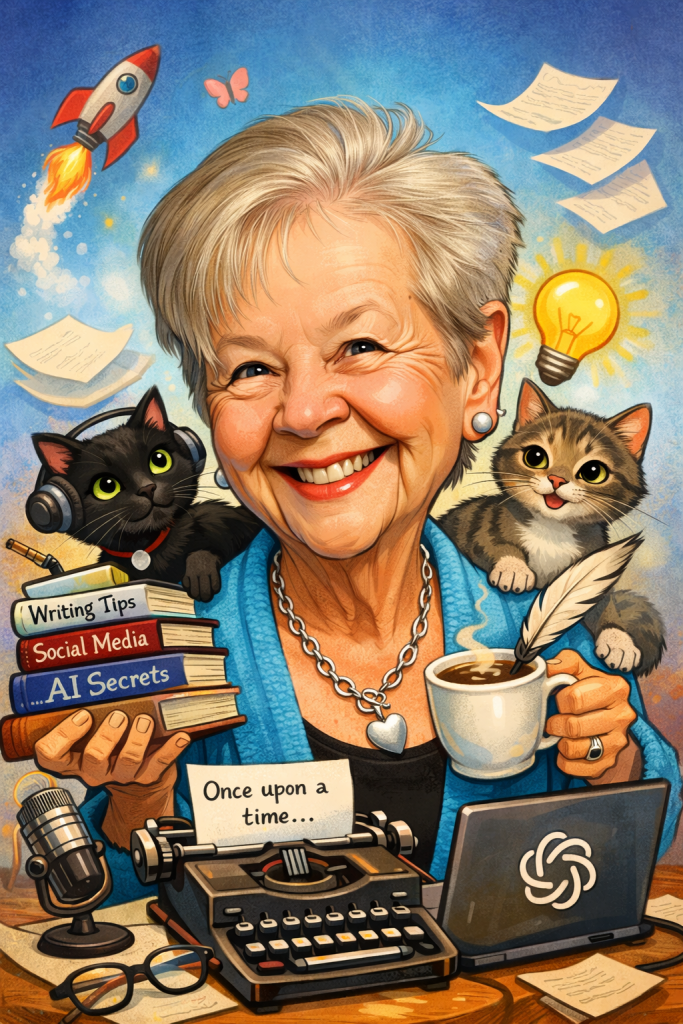
Pat Iyer MSN RN LNCC is a consultant, speaker, author, editor and coach. She has written or edited 75 of her own books and worked with dozens of authors as an editor. her most recent books are AI-Powered Video for LNCs book and workbook. Pat is an Amazon international #1 bestselling author. Coaches, consultants, and speakers hire Pat to help release the knowledge inside them so that they can attract their ideal clients.
She delights in assisting people to share their expertise by writing. Pat serves international and national experts as an editor, book coach, and a medical and business writer.
This is so helpful. Excellent insight in defining the “human” medically-educated value we bring to the AI discourse. Thank you!